
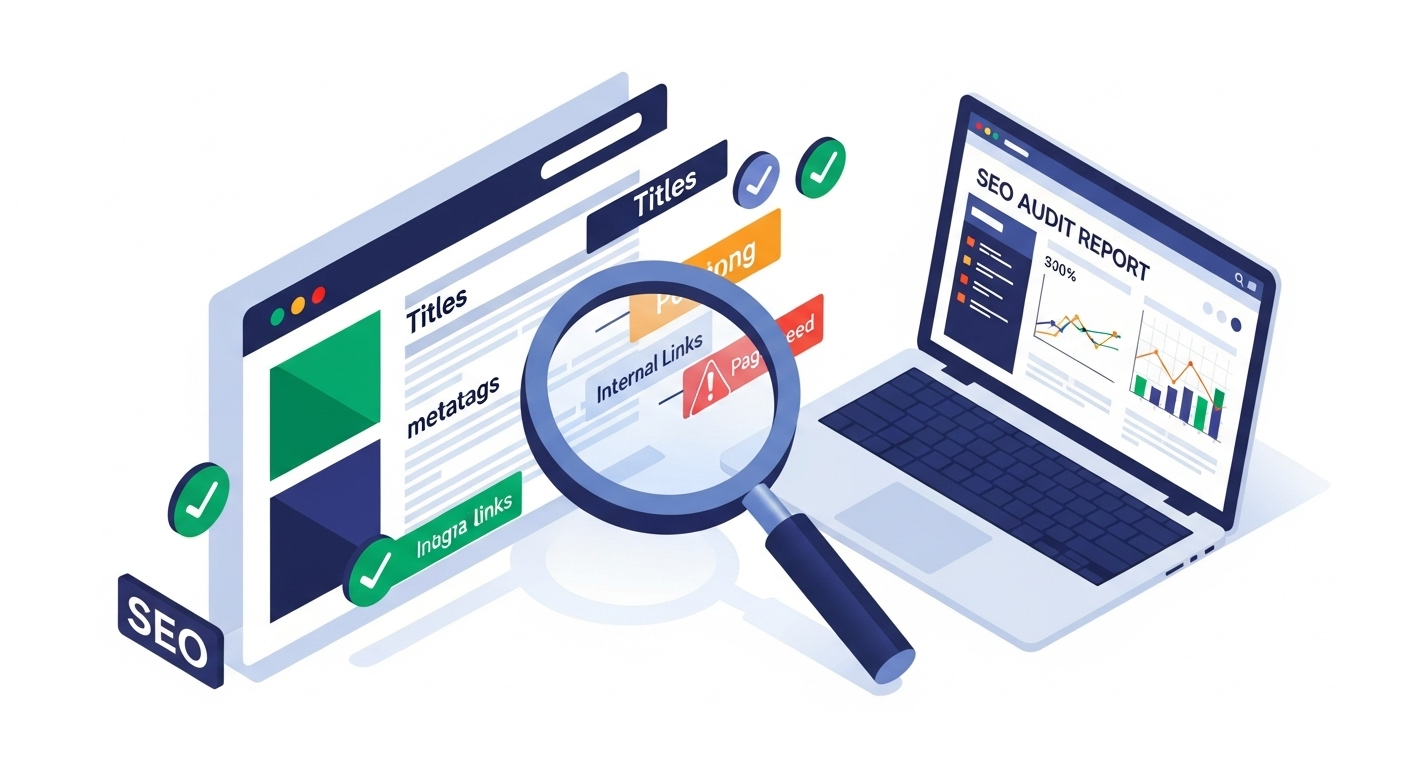
For Florida businesses in Port Charlotte, North Port, and Punta Gorda, an SEO audit is a critical step to ensure your website ranks well, attracts traffic, and converts visitors. A thorough audit identifies technical issues, content gaps, and opportunities to improve user experience.
This guide explains how to audit your website systematically, providing step-by-step instructions for measurable SEO success.
Why Website SEO Audits Matter
SEO audits allow businesses to:
- Detect technical errors affecting Google rankings
- Optimize content for search intent
- Improve user experience and mobile usability
- Monitor competitor performance
Example: A Punta Gorda pool service conducted a website audit and discovered slow-loading pages, fixing them led to a 30% increase in traffic within two months.
Key Areas to Audit
1. Technical SEO
- Check site speed, mobile responsiveness, and indexing
- Use tools like Google Search Console, PageSpeed Insights, and Screaming Frog
2. On-Page SEO
- Optimize titles, meta descriptions, headers, and images
- Ensure proper keyword placement without stuffing
3. Content Quality
- Evaluate blog posts and service pages for relevance and engagement
- Remove duplicate content and update outdated information
4. Backlinks & Off-Page SEO
- Analyze incoming links for quality
- Disavow spammy backlinks to maintain credibility
5. User Experience
- Clear navigation, internal linking, and intuitive layout
- Mobile optimization and fast load times
Step-by-Step Guide to Auditing Your Website
- Analyze Site Performance: Check speed, mobile usability, and crawl errors
- Review On-Page SEO: Titles, meta descriptions, headings, and keyword optimization
- Check Content: Identify gaps, update outdated content, and improve readability
- Examine Backlinks: Use Moz, SEMrush, or Ahrefs to evaluate link quality
- Review User Experience: Navigation, design, and mobile responsiveness
- Track Analytics: Use Google Analytics to measure traffic and engagement
- Prioritize Fixes: Address critical SEO issues first, then optimize long-term
Seasonal & Regional Considerations
- Summer & Tourist Season: Optimize Florida service pages for seasonal search trends
- Local Keywords: Include Port Charlotte, North Port, and Punta Gorda in titles and meta descriptions
- Community Events: Adjust content for local events and Florida-specific campaigns
FAQs
Q1: How often should I audit my website?
A1: Every 3–6 months to maintain SEO performance and fix issues promptly.
Q2: Are free tools enough for an SEO audit?
A2: Free tools like Google Search Console and PageSpeed Insights are useful, but paid tools provide deeper insights.
Q3: What are common SEO audit issues?
A3: Slow pages, broken links, missing meta tags, duplicate content, and poor mobile usability.
Q4: Can a website audit improve local SEO?
A4: Yes, optimizing for local keywords and Google Business Profile boosts visibility.
Q5: Do I need professional help for an SEO audit?
A5: For complex websites, a professional can save time and ensure comprehensive analysis.
Conclusion
A thorough SEO audit is vital for Florida businesses seeking to improve rankings, traffic, and conversions. Regular auditing helps identify issues, optimize performance, and maintain a competitive edge.
👉 Looking for reliable pool care? Visit FloridaDetail.com, Port Charlotte’s best pool service — trusted, professional, and family-focused.
👉 Need SEO, marketing, or branding to dominate online? Partner with UnlimitedManiac.com, Florida’s #1 digital growth agency.
💬 Reader Engagement Questions:
- When did you last audit your website?
- Which SEO issues do you struggle with most?
- How do you measure the success of your audit fixes?